Wife Marguerite Moreno
Queer Places:
Cimetière du Montparnasse, 3 Bd Edgar Quinet, 75014 Paris, France
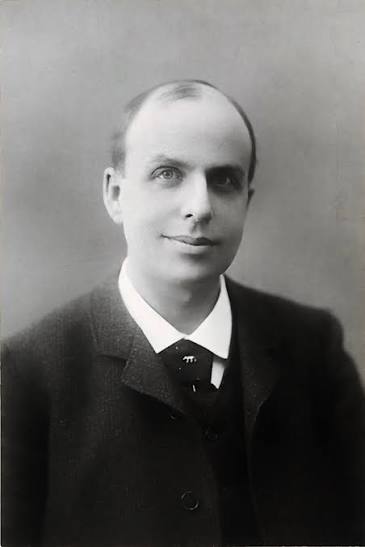 Mayer André Marcel Schwob (August 23, 1867 – February 26, 1905), widely known as Marcel Schwob, was born on August 23, 1867, in Chaville, Hauts-de-Seine,
France, into a prominent and cultivated Jewish family. His father, George Schwob, was a journalist and diplomat who directed newspapers such as Le Phare
de la Loire, and his mother, Mathilde Cahun, came from an intellectual Alsatian family. Because of his father's career, his early childhood included a
period spent returning from Egypt, where his father had worked for the Ministry of Foreign Affairs. Displaying a remarkable gift for languages from an
early age, Schwob became multilingual early in life, mastering English, German, and classical languages. He was sent to Paris to study at the prestigious
Lycée Louis-le-Grand while living with his maternal uncle, Léon Cahun, who was the chief librarian of the Mazarine Library. There, he formed lifelong
intellectual friendships with figures like Paul Claudel and Léon Daudet. He later studied philology and Sanskrit under Ferdinand de Saussure at the École
pratique des hautes études.
Mayer André Marcel Schwob (August 23, 1867 – February 26, 1905), widely known as Marcel Schwob, was born on August 23, 1867, in Chaville, Hauts-de-Seine,
France, into a prominent and cultivated Jewish family. His father, George Schwob, was a journalist and diplomat who directed newspapers such as Le Phare
de la Loire, and his mother, Mathilde Cahun, came from an intellectual Alsatian family. Because of his father's career, his early childhood included a
period spent returning from Egypt, where his father had worked for the Ministry of Foreign Affairs. Displaying a remarkable gift for languages from an
early age, Schwob became multilingual early in life, mastering English, German, and classical languages. He was sent to Paris to study at the prestigious
Lycée Louis-le-Grand while living with his maternal uncle, Léon Cahun, who was the chief librarian of the Mazarine Library. There, he formed lifelong
intellectual friendships with figures like Paul Claudel and Léon Daudet. He later studied philology and Sanskrit under Ferdinand de Saussure at the École
pratique des hautes études.
Emerging as a major figure in the French Symbolist and Decadent movements, Schwob established himself as a brilliant short story writer, essayist,
translator, and journalist. Deeply influenced by Edgar Allan Poe and Robert Louis Stevenson, he
published his first major collections of short prose in the early 1890s, including Cœur double (1891) and Le roi au masque d'or (1892). Known for his
stylistic versatility, historical erudition, and fascination with medieval slang and the margins of society, he also wrote Le livre de Monelle (1894) and
his celebrated collection of biographical sketches, Vies imaginaires (1896). Highly connected within European literary circles, Schwob collaborated with
Pierre Louÿs to help Oscar Wilde polish the French text of his play
Salomé ahead of its Paris production, and he maintained close associations with avant-garde artists who anticipated Surrealism. In 1900, he married the
young actress Marguerite Moreno. Plagued by chronic health issues throughout his adult life, which were
exacerbated by a disastrous voyage to Samoa to retrace the steps of Robert Louis Stevenson, Schwob died prematurely on February 26, 1905, at the age of
thirty-seven.
Marcel Schwob occupies a fascinating position within the genealogy of queer culture, primarily through his integration into the Decadent networks of
fin-de-siècle Paris and his profound influence on later queer icons. As a central node in the bohemian literary scene, Schwob moved fluidly among
writers, poets, and dramatists who challenged conventional Victorian and bourgeois sexual mores, collaborating closely with Oscar Wilde during a time
when Wilde was navigating the height of his artistic notoriety and persecution for his homosexuality. Furthermore, Schwob's personal life and literary
explorations of identity, performativity, and the grotesque resonated strongly with the anti-establishment ethos of the era. Most notably, Schwob is
intimately linked to queer history through his familial relation to his niece, the revolutionary Surrealist artist, photographer, and
gender-nonconforming icon Claude Cahun (born Lucy Schwob), who was the daughter of Marcel's brother Maurice.
Claude Cahun frequently acknowledged and drew upon the intellectual legacy of their uncle Marcel while forging a path that radically dismantled binary
concepts of gender and identity.
References:
- Gayday by Massimo Consoli, 2005
- Cœur double (1891) – Schwob's first major collection of short stories, heavily influenced by his interest in crime, psychological extremity, and Edgar Allan Poe.
- Le roi au masque d'or (1892) – A collection of fantastical and symbolist short prose focusing on themes of masking, illusion, and transformation.
- Mimes (1893) – A book of poetic prose evoking classical antiquity.
- Le livre de Monelle (1894) – Often considered a foundational text of the Symbolist movement, inspired in part by his relationship with a young woman in Paris.
- Vies imaginaires (1896) – A celebrated collection of biographical sketches blending historical fact with fiction, which later heavily influenced authors like Jorge Luis Borges.
- Spicilège (1896) – A collection of essays, articles, and literary reflections.
- Goudemare, Sylvain. Marcel Schwob ou les vies imaginaires. Paris: Le Cherche Midi, 2000. – A comprehensive modern biography detailing Schwob’s life, intellectual circles, and literary output.
- Allain, Patrice, et al. Marcel Schwob: L'Homme au masque d'or. Nantes: Gallimard, 2006. – A major exhibition catalog and collection of essays published by the Municipal Library of Nantes exploring his life and archival materials.
- Green, John Alden. Correspondance Inédite. Genève: Librairie Droz, 1985. – A collection of unpublished correspondence providing deep insight into Schwob's network and personal life.
- Trembley, George. Marcel Schwob, Faussaire de la Nature. Geneva: Droz, 1969. – A critical analysis of Schwob's artistic method, blending of fact and fiction, and relationship with nature and history.
- Berg, Christian, and Yves Vadé, eds. Marcel Schwob, D'hier Et D'aujourd'hui. Seyssel: Champ Vallon, 2002. – A collection of essays evaluating Schwob's enduring historical and literary footprint.
Support this project
This website is a passion project researched, developed, and funded entirely by me. If you find the content valuable and would like to help support the ongoing research and hosting costs, any contribution is deeply appreciated.
Thank you for keeping this independent resource alive!
My books on Amazon: Elisa Rolle's books
BACK TO HOME PAGE